
Why Reading Aloud Is Essential for Child Development: Unlocking Growth, Language, and Joy
My mom died last year, and as I wrote the last line of this post, now, 4 months later I suddenly heard her reading my little brother’s favorite book called Hello, Elephant. I can hear her saying the repeated phrase, “Hello, Elephant!” and it brings her right back to me.
I was I used to volunteer at the maximum security Bedford Hills Correctional Facility for Women. I taught prisoners writing for children. Part of my teaching included reading out loud to them with my usual over-the-top “acting,” doing voices, bellowing, etc. Like I did with my own kids, and my mom did for my brother and me. I will never forget one woman telling me she never knew she was supposed to read to her kids. Nobody had ever read to her. So how could she know? It broke my heart, but opening her eyes to the importance of modeling reading and books also mended my heart.
Reading aloud isn’t just a cozy tradition—it’s a powerful engine for child development. When you share a picture book with your voice, you’re scaffolding language, sparking imagination, and building emotional resilience. Keep reading to learn why reading aloud matters, and how three stellar titles make the case beautifully: Hot Dog by Doug Salati, Mama’s Sleeping Scarf, by and the gorgeous Bunny & Tree by by Balint Zsako.
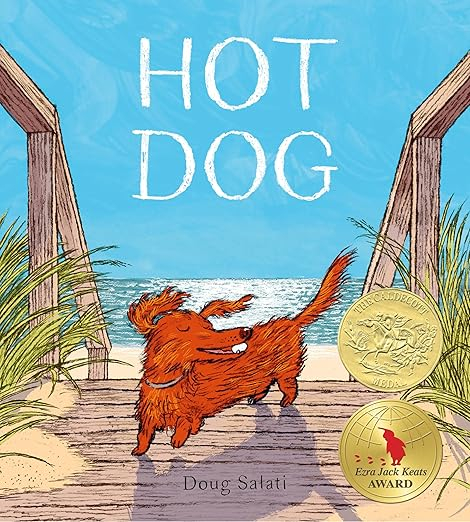
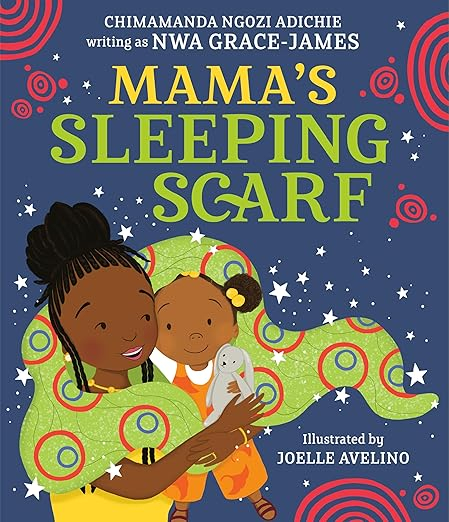
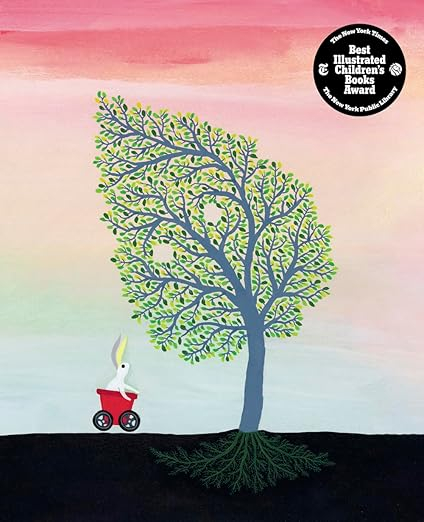
Why reading aloud matters
When you read aloud you are doing multiple things at once: you’re modeling fluency, you’re demonstrating expression and pacing, you’re giving children access to rich vocabulary and sentence patterns they may not hear in daily speech. Psychologists tell us that children exposed to frequent read-alouds have stronger narrative skills and better attention spans. Beyond language, you’re inviting connection: shared look, shared pause, shared wonder. For development, read-aloud builds three critical pillars: language, emotional literacy, and social participation.
Integrating these into your routine
-
Every day: Add a daily 5-minute read-aloud with one of the books above.
-
Bedtime: Choose slower books (Mama’s Sleeping Scarf) to develop emotional resilience and wind-down space.
-
Group/library/story-time: Choose wordless books like Bunny & Tree that invite participation, repetition, and movement. Children learn storytelling skills when watching the story unfold through only illustrations.
-
Skill-targeting: Track specific skills—new vocabulary, prediction, emotion talk—then pick titles intentionally.
-
Inclusive reading: Use titles that reflect diverse experiences so children from all backgrounds feel seen, and others learn empathy.
When you read aloud, you’re doing much more than sharing a story. You’re opening doors—to language, to belonging, to expression. The books above are more than pages; they are tools for growth. Something magical happens when a child hears you flip the pages and lean in. Their brains connect words to voices, voices to meaning, meaning to self. Read aloud often. Read aloud deeply. Read aloud with joy—because children not only learn from a voice that reads, they remember the voice.
About the Blog
Welcome! I'm Katie Davis, a children's book author with a passion for helping writers bring their stories to life. Here you'll find tips, tricks, and tales from my twenty years in publishing.
Learn more about me →
Recent Posts


Newsletter
Get writing tips delivered to your inbox weekly.