
Top 10 Picture Books for Bedtime Reading
Cozy read-alouds that help kids wind down, feel safe, and actually stay in bed
If bedtime at your house is less “sweet dreams” and more “one more sip of water, one more song, one more existential question,” you’re in the right place. (After all, that is what I know best, having had THAT kid. He is the inspiration for my second book, I Hate To Go To Bed!)
The best picture books for bedtime reading do more than fill time—they shape the mood. A great bedtime story for kids is part lullaby, part routine, part gentle landing. It uses calming language, reassuring structure, and illustrations that practically whisper, “You can let go now.” I had to learn that as I wrote I Hate To Go To Bed! In my early drafts I had an actual party, not in my MC’s dream. Nooooo. Can’t get a child excited with a bedtime book!
Below are ten standout bedtime picture books (all published 2022–now) plus the craft ingredients that make them work. Sprinkle these into your bedtime reading routine and watch the room temperature drop approximately seven degrees (in a good way).
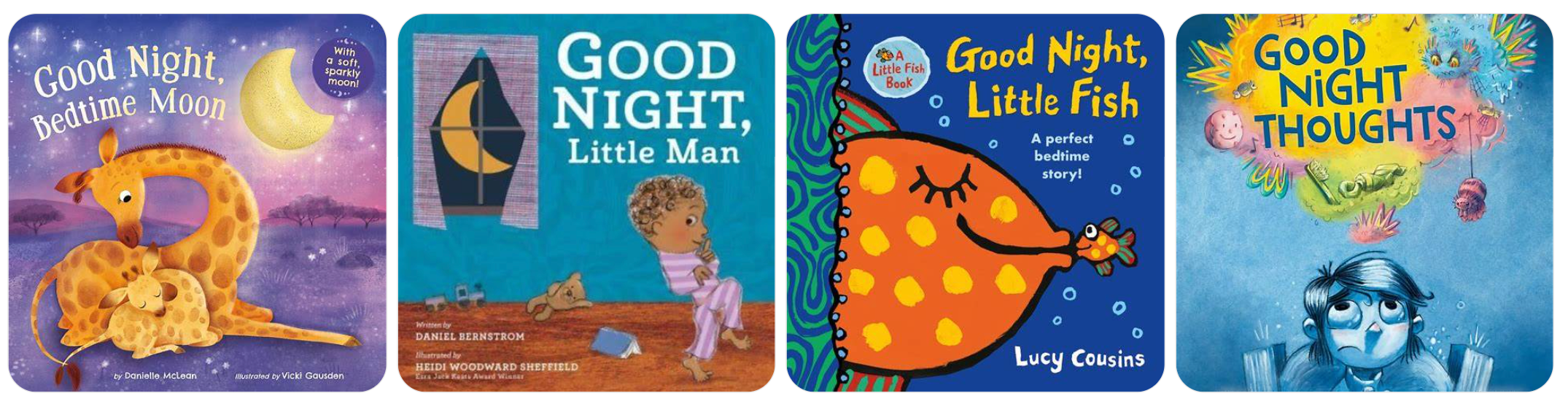
The Top 10 Bedtime Picture Books
Good Night, Bedtime Moon A sweet, rhyming bedtime board book with a tactile, sparkly die-cut moon—designed to soothe through repetition and sensory comfort.
I Just Want to Say Good Night
A cozy bedtime tale anchored in familiar end-of-day signals—perfect for toddlers who love predictability.
Good Night, Little Man
A rhythmic, funny, warm bedtime romp: a child can’t sleep without a beloved stuffie, triggering a whole-house search (so relatable it should come with a parenting merit badge).
Good Night, Little Fish
Lucy Cousins delivers bright simplicity and a clear bedtime arc—ideal for very young listeners who need “comfort + clarity” at the end of the day.
Good Night, Good Beach
An evocative, sensory goodnight to a day at the shore—salt air, waves, sandy feet, and that hush-hush rhythm that naturally invites sleep.
Good Night Thoughts
A bedtime book for kids whose brains throw a midnight dance party of worries—gentle, validating, and surprisingly funny in a “yep, been there” way.
It’s Time to Hush and Say Good Night
Lullaby-like verses and a dream-journey feel—excellent for families who want bedtime to feel like being carried, not herded.
Good Night, Belly Button
A novelty bedtime ritual with lift-the-flap style page turns—built for interactive goodnights and baby giggles that don’t turn into full chaos. Lerner Publishing Group
Bedtime Is Boring!
A funny, empathetic take on the universal protest: “Why sleep when I could… not?” Great for diffusing tension with humor that still lands softly.
What’s Scarier Than Thunder? A bedtime fears book that uses humor as a flashlight—helpful for kids who feel brave in daylight and wobbly at night.
What makes a bedtime picture book actually work?
1. It has a “downward slope” structure
The best bedtime picture books don’t rev the engine on page 26. They start with a tiny problem, move through familiar actions, and end with emotional closure.
Good Night, Little Man nails this: one missing comfort object, one escalating search, then a satisfying return to calm.
Bedtime takeaway: choose books with a clear settle-down trajectory, not surprise fireworks.
2. The language is read-aloud friendly (even for tired adults)
When you’re reading at the end of a long day, you want musical phrasing, repeatable patterns, and lines that feel good in the mouth.
Good Night, Bedtime Moon is built around soothing rhyme and repetition, plus that tactile moon that turns “reading time” into “ritual time.” Bedtime takeaway: look for rhythmic text you can practically chant.
3. It offers emotional safety, not emotional homework
Bedtime is not the moment for unresolved dread. The best bedtime stories for toddlers and preschoolers acknowledge feelings—fear, worry, separation jitters—and then provide reassurance.
Good Night, Little Fish keeps the emotional temperature gentle while guiding the story toward rest—ideal for winding down without stirring up big questions.
Bedtime takeaway: comfort first; complexity can happen at breakfast.
4. The illustrations help the room get quieter
Even with bright art styles, strong bedtime books avoid visual clutter and keep the page energy controlled. Your goal is “soft focus,” not “spot-the-300-things.”
A quick bedtime stack strategy
For a rock-solid bedtime reading routine, try a three-book stack:
One playful-relatable book (Good Night, Little Man)
One soothing rhythm book (Good Night, Bedtime Moon)
One ultra-simple calm-down book (Good Night, Little Fish)
That sequence meets kids where they are, then gently guides them to stillness—like a tiny literary landing strip.
About the Blog
Welcome! I'm Katie Davis, a children's book author with a passion for helping writers bring their stories to life. Here you'll find tips, tricks, and tales from my twenty years in publishing.
Learn more about me →
Recent Posts


Newsletter
Get writing tips delivered to your inbox weekly.