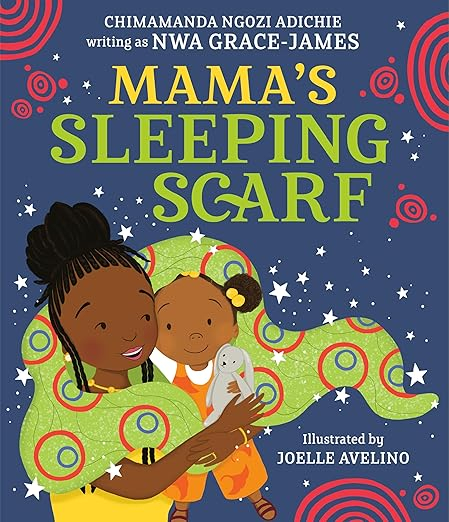
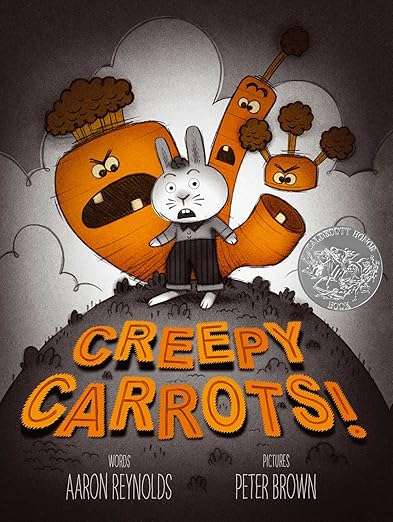
You really need to click on these to see the looks on the kids faces. I was asking them to make expressions I then drew on characters in a story we created together. It was a great way to illustrate beginning, middle and end, and the power of imagination and storytelling! Those kids rocked!
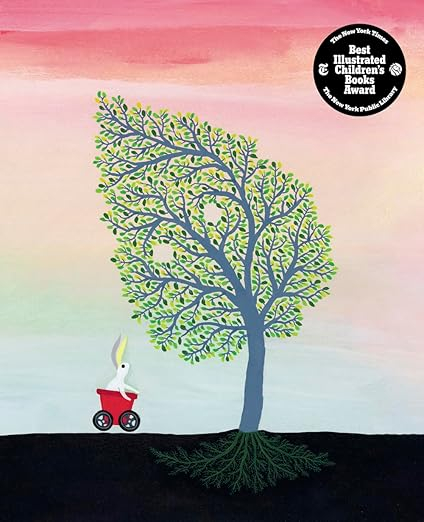
It Jes Happened – a children’s biography on Bill Traylor, who started drawing at the age of eighty-five and became one of America’s most important outsider artists.
Which is more important for promoting a new book and author: A blog or a website? How do I create a Facebook Fan Page? What are the most effective (and cost effective) ways of targeting my book to the right audience and getting it noticed? How do I use my Facebook Author Page to link to my individual Facebook Book Pages (and vice versa)? I have not even started a Facebook acct for myself due to all kinds of fears of liability (I am a teacher). I do not know why anyone uses twitter…who cares if I had toast for breakfast? How do all these tools help me as a writer How do I create a Facebook Fan Page? (Here is are the step-by-steps):
Go to Facebook.com
Enter the info (name, email, etc).
Use letters, cases, and numbers for your password for best security. For example: ILOVeSCbWi2012
Click create a page.
Click “Artist, Band or Public Figure”
Choose your category
If you don’t have a Facebook account, fill in the info, confirm when you get the email.
When you confirm, pick a bio photo and be consistent with your other social media.Play around, add other images and watch this video!
Hi Katie,
I love your work. Both your poems and illustrations–I also love your many bios Was wondering if you had time to look over my poems and ills on my poetry for kids site. There is roughly 30 poems, so you’re looking at a half hour total … I’ve been cartooning, writing and illustrating for a few years now and am just now getting my poetry “out there”. I would love your feedback if you have the time.
Thanks so much for the kind words! I really don’t have time, but even if I did, the only time I critique work is when I’m on faculty at a writing conference, like the Highlights Foundation Founders Workshops or SCBWI. There are, however, many who do critiques. I don’t know what the going rate is these days, but I suggest you click on some of the links under Editors over there to the right. There are also people like my dear friend, the talented Esther Hershenhorn whom you should definitely check out.
Today’s guest poetry poster is Irene Latham, an award-winning author of two volumes of poetry and two novels. She also serves as poetry editor for Birmingham Arts Journal and contributes poems to Scholastic’s Storyworks and Scope magazines.
Those who don’t write poetry often wonder why anyone would spend time on a market so unpopular and little read. It’s not for the fame-hounds or money-hungry, that’s for sure. Even when you are lucky enough to have a book of poems.
Consider these quotes:
“There’s no money in poetry, but then there’s no poetry in money, either.” – Robert Graves
“Publishing a volume of verse is like dropping a rose petal down the Grand Canyon and waiting for the echo.” – Don Marquis
Yet, to me, poetry is absolutely essential. Here’s a few reasons why:
1. It’s short.
You can write an entire poem in a day – or at least several drafts of a poem. This makes it perfect for the time-challenged, young mothers, over-extended. Unlike a novel which takes hours upon hours, you can crank out a first draft of a poem in minutes. You can hand your lines to a reader and experience immediate gratification.
2. Word play is fun.
When every syllable matters, things get intense. But that’s where the joy is. That’s where assonance and meter and rhyme come in. Writing poetry is about playing with language. You can even make words up, if you want to. And oh, the satisfaction when you find Just The Right Word — is there a better feeling in the world?
3. It makes you a life-long student of the world.
When you write poetry, you approach life with curiosity and wonder. Leaves don’t ever merely fall to the ground. Some dive, some twist, some jet, some dawdle. Poets are keen observers. We are constantly on the lookout for analogies, patterns and oddities in nature and in relationships. We see things, hear things others don’t. Because those are the things we want to put into our poems.
4. It gives you permission to explore all emotional terrain in a safe way.
Poetry is compressed emotion. The whole point is to create an emotional experience for yourself and for readers. If you have fears about death, you can put them in a poem. Anger, sadness, joy, despair… poetry is the place for the most sustaining and destructive emotions. Your job to be passionate. This passion is the vehicle that will take you toward your own emotional truths.
5. Different is good.
Unlike many other areas of life, when you write poetry you are expected to be a little odd. You might even be celebrated for this oddness. You can embrace all that is eccentric about yourself — and even cultivate new eccentricities. You can do this on the page or in real life, and no one blinks. Because you’re a Poet. And poetry is not bound by a strict set of rules. (The only rule is there are no rules.) It’s quite liberating, actually. And allows you to invest more fully in the best poem of all: You, Your Life.
I “met” Greg Pincus, today’s guest poetry poster, when I came across his Fib poems and loved them. After years, I finally actually met him last summer. In person. For real.
I’m not much of a poetry formalist, I admit. In fact, I normally write funny, rhyming verses of no set form. Writing villanelles makes me cry. Sonnets cause sobbing. Yet, from time to time, I do love playing around with form, and I always love trying new ideas. That’s how I started telling Fibs.
In this case, Fibs are not lies, small or large. Instead, they’re six line, 20 syllable poems based on the Fibonacci sequence. Oh, I know. I know. No one told you there would be math today. But trust me. It won’t hurt.
The Fibonacci sequence, named for the 12th century mathematician Leonardo Fibonacci, is a series of numbers where each one is the sum of the two before it. The classic sequence starts with 0 and 1 and builds from there: 0, 1, 1, 2, 3, 5, 8, 13, 21, 34 and on and on and on. I decided to make zero a moment of silence then stop writing after the 8 syllable line. Here’s the first Fib I wrote:
One
Small,
Precise,
Poetic,
Spiraling mixture:
Math plus poetry yields the Fib.
While I am far, far, far from the first to write based on Fibonacci – people have long written books, poems, and songs among other things – I might’ve been the first to call these short poems based on it Fibs. I started off writing them as kind of a warm up exercise, and I still write them today. This form, at least for me, is sticky.
Somewhat to my surprise, I have found that kids love playing with Fibs, even when I add in my one “rule” – the one syllable lines can’t have an article or conjunction, meaning “the” “and” and other place fillers aren’t allowed. Frequently, we start off with one of my animal Fibs as an example…
CAT
Purr.
Purr.
I’m Cat.
Stretch and groom.
Sleep deep… and then zooooom,
Chasing something only I know.
… then the kids race off and create.
Personally, I think you should follow their example – start telling Fibs. They’re good for you. Honest!